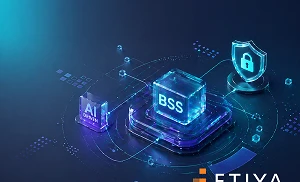

New ITU focus group aims to make agentic AI trustworthy and accountable
- Details
- Category: Cybersecurity
- 1284 views

The International Telecommunication Union (ITU) announced on Thursday it has launched a new initiative to develop frameworks that ensure that the behaviour of AI agents are trustworthy and accountable.
While agentic AI promises telcos major gains in productivity, it also introduces new risks ranging from autonomous agents impersonating people or organizations, to taking unauthorized actions across interconnected systems.
The new ITU Focus Group on Trust and Identity for Humans and Agentic AI (FG-TIDA) – unveiled at this week’s AI for Good Global Summit in Geneva – aims to address these challenges by developing frameworks that preserve meaningful human control for tasks such as executing financial transactions and operating critical infrastructure.
The group will address the challenges of trust management for people and AI agents, the overall trustworthiness of agentic AI systems, and ways to strengthen confidence in how AI agents behave while retaining authority over their actions, said FG-TIDA co-chair Debora Comparin.
“AI agents will soon negotiate, transact and make decisions on our behalf," Comparin said in a statement. “Before that future becomes reality, we need common international foundations that establish who these agents are, when they can be trusted, and how people will remain in control. That is the challenge this Focus Group has been created to address.”
“Agentic AI introduces a new class of digital actors that will increasingly collaborate with people and one another,” added co-chair Amir Banifatemi. “Identity tells us who is acting and trustworthiness tells us how that actor can be expected to behave. Bringing these together creates the common foundation needed for interoperable, accountable, and trusted AI systems at global scale.”
FG-TIDA is open to technical experts as well as specialists in policy, law and regulation to develop common terminology and definitions; reference architectures for identity, trust, agent discovery, and interoperability; trust frameworks and lifecycle (assurance) models; interoperability mechanisms for digital identity and credentials; security criteria and benchmarks for the continuous assessment of AI agents; and a standardization roadmap to coordinate action across expert communities.
FG-TIDA will report to ITU's expert group for security standards, ITU-T Study Group 17.
Comparin and Banifatemi will be joined by a larger leadership team being finalized in the coming weeks. The group, which is open to all interested experts, will hold its first meeting in Paris this November.
More Articles you may be Interested in...



Tunisia sets mobile ID deadline for investors


Orange Jordan to support census plans


True IDC breaks ground on major Bangkok facility





Togo and Poland sign drone deal